


Service:
Subsea Pipeline Inspection Using the Metal Magnetic Memory Method (Non-Contact Magnetometry) – MMM/MTM
- Total inspected length: 155 kilometers of pipelines.
- Depth: Contractual limit of 500m water depth.
- Locations: Campos and Sergipe-Alagoas Basins.
The Challenge
Managing the integrity of subsea pipelines is a critical priority in the oil and gas industry. Petrobras, for example, operates more than 4,000 kilometers of rigid pipelines in Brazilian waters.
The major challenge facing the sector is that approximately 50% of the global pipeline network cannot be inspected by internal tools – classified as “non-piggable” – due to factors such as multiple diameters, sharp bends, or the absence of pig launchers and receivers.
For conventional external inspection, thick layers of thermal insulation or concrete coating present a significant obstacle. Removing these coatings on the seabed to enable inspection dramatically increases vessel time and operational costs, compromising the financial viability of maintenance programs.
The Priner Solution
To optimize the integrity management of these assets, an inspection strategy based on the Metal Magnetic Memory Method (MMM), also known as the Magnetic Tomography Method (MTM), was implemented.
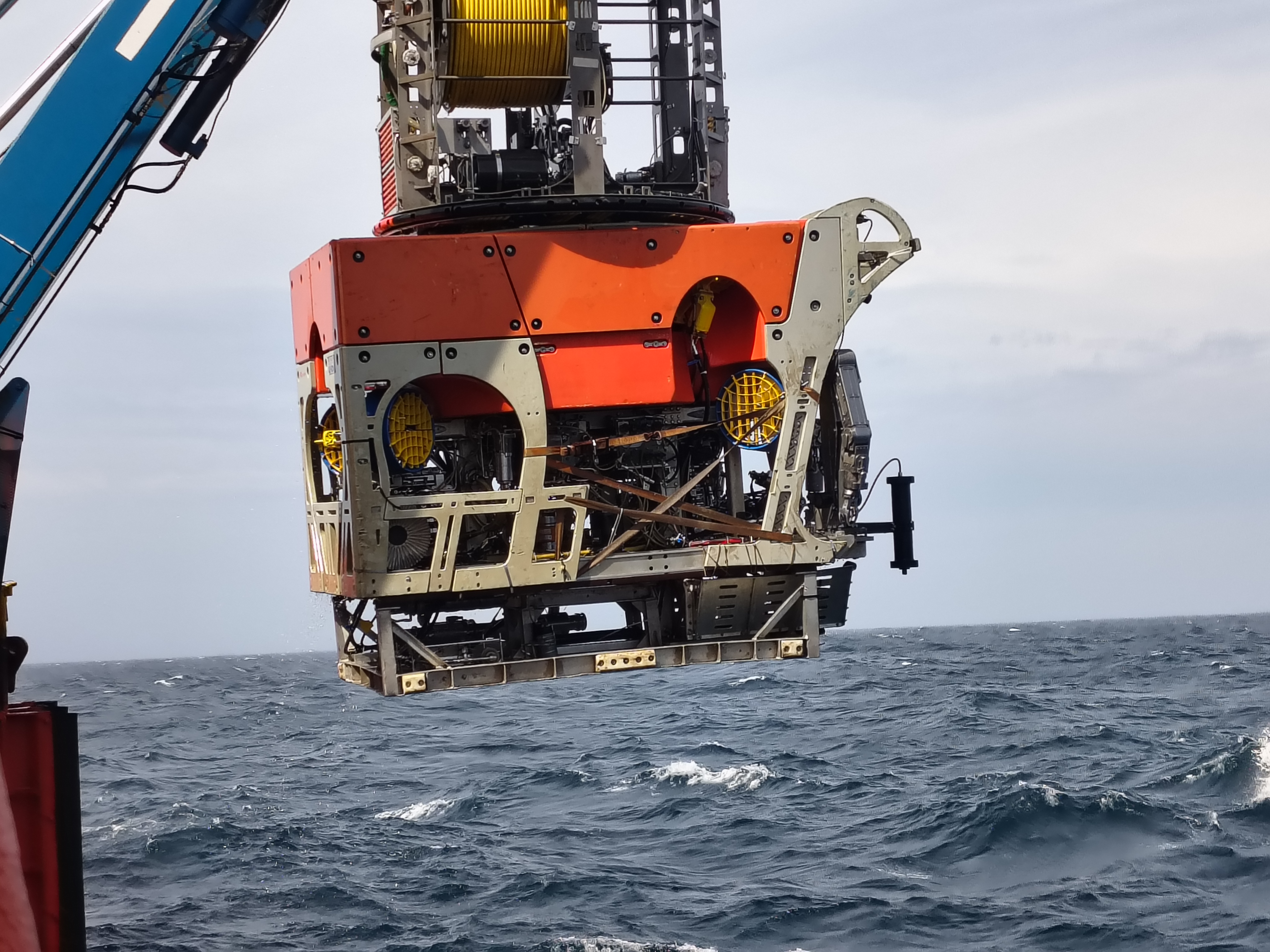
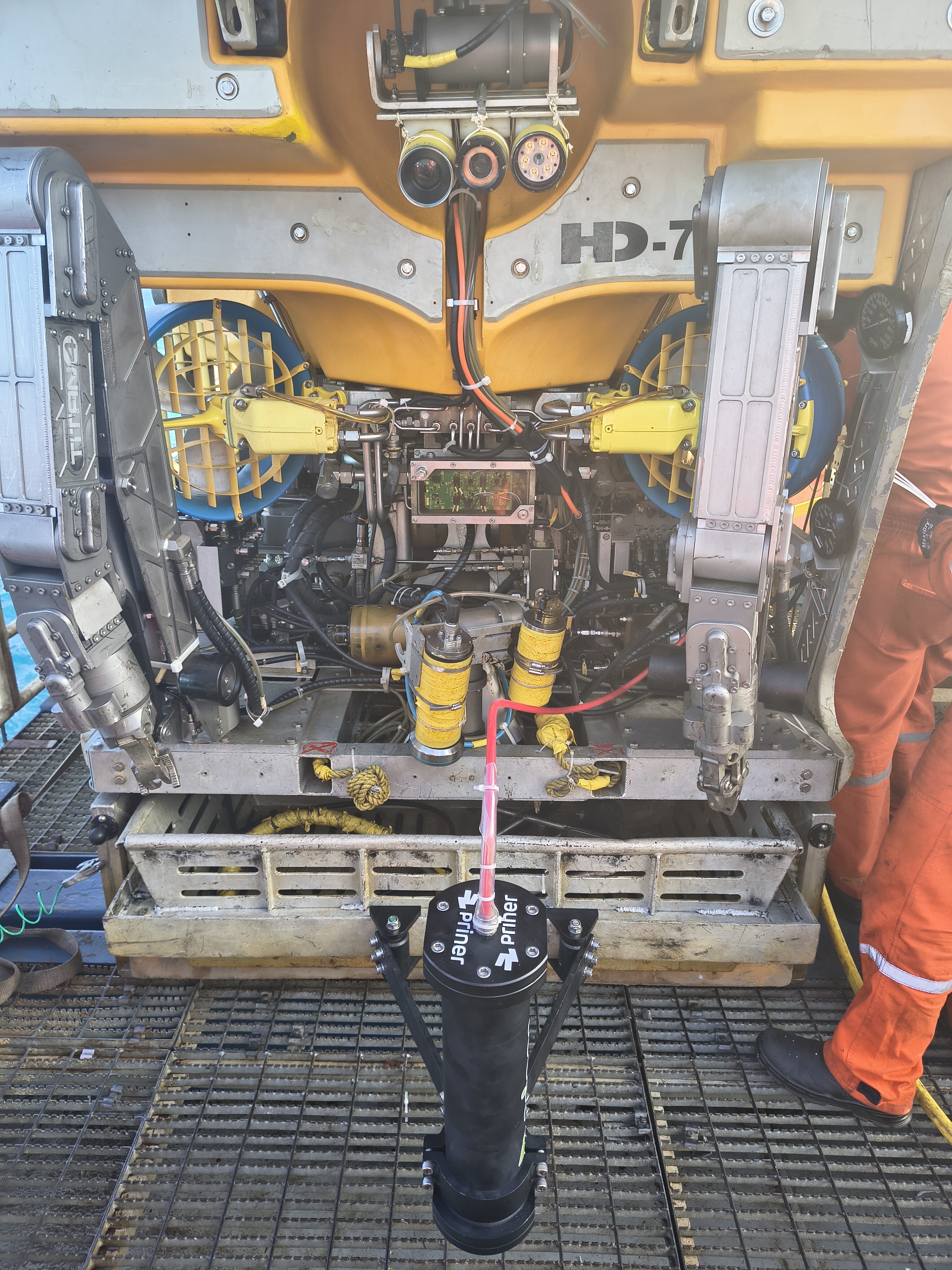
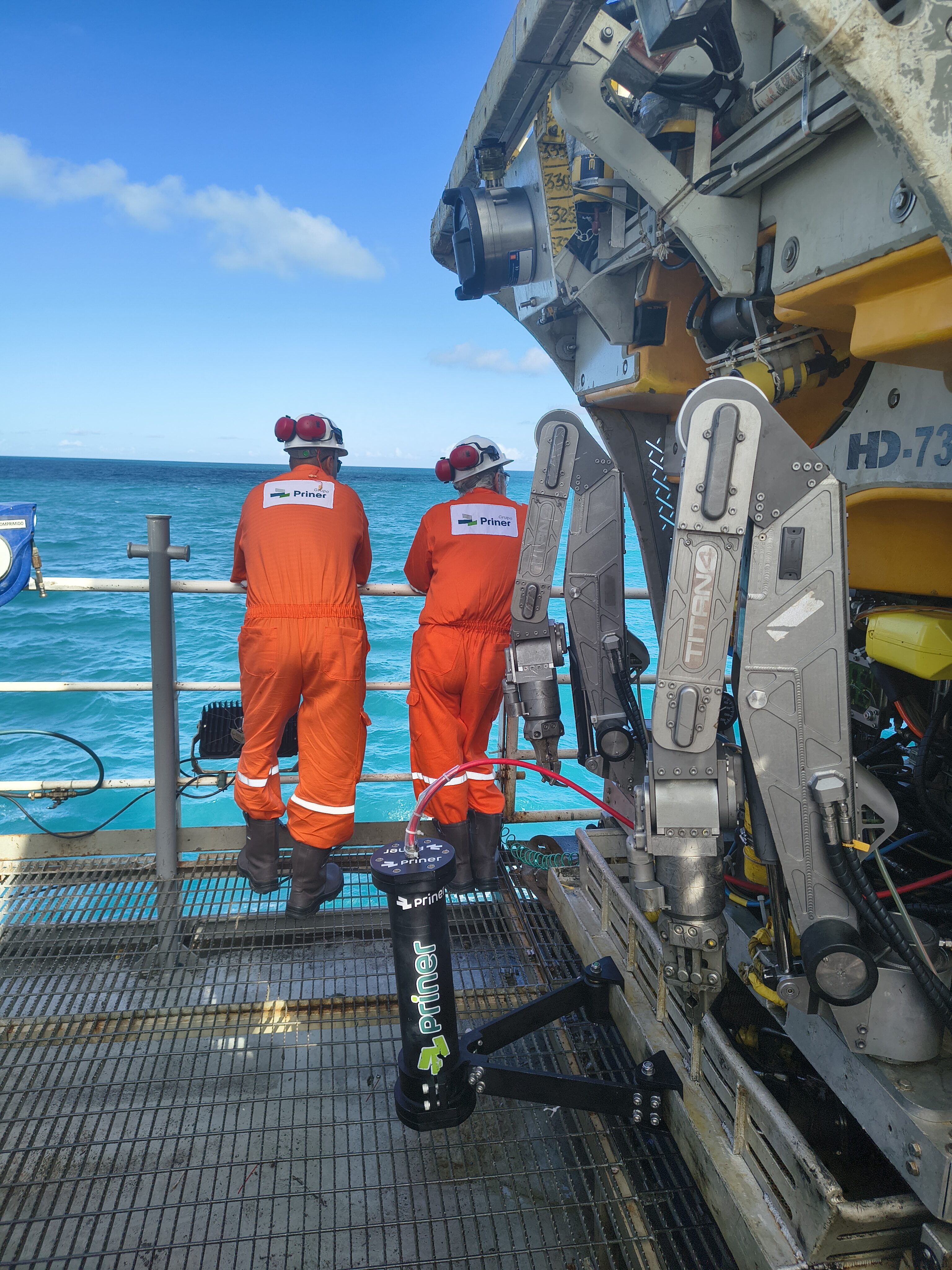
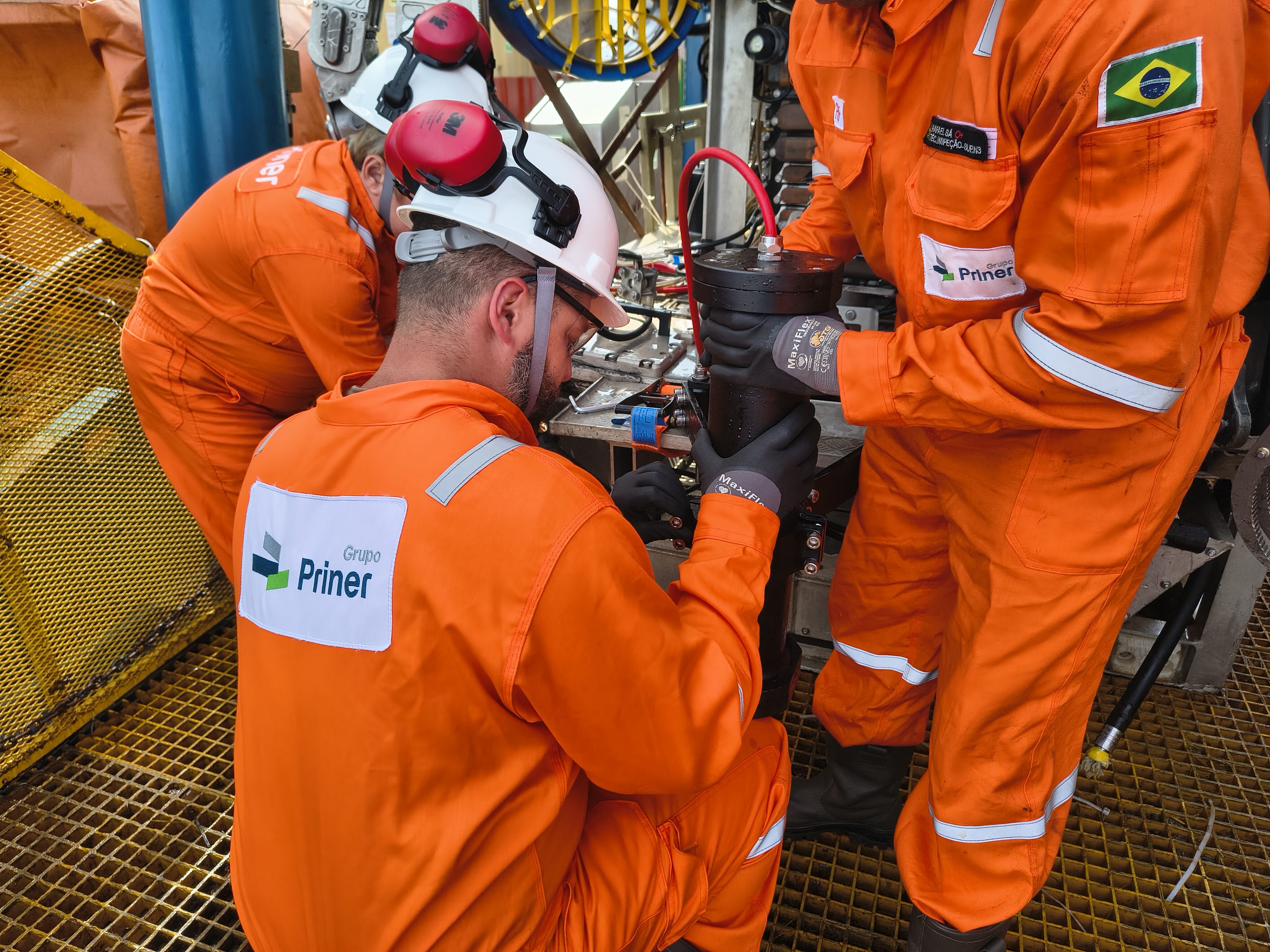
Using Non-Contact Magnetometry technology, high-resolution sensors were installed on a Remotely Operated Vehicle (ROV).
The method takes advantage of the passive magnetic phenomenon of metal: defects and anomalies create Stress Concentration Zones (SCZ) that generate a detectable magnetic leakage field, influenced by the Earth’s own magnetic field. This eliminates the need for external magnetic sources or direct contact with the pipeline.
Technology Advantages and Differentiators
- No interruption: The inspection did not require a shutdown or flow stoppage of the pipeline.
- No cleaning: No surface preparation or removal of the protective coating was required.
- Long range: Scanning can be performed without physical contact, effective at a distance of up to 15 times the pipe diameter.
- Multiple detections: The tool simultaneously assesses metal loss (localized damage) and changes in structural geometry or stress-strain states (sagging, misalignments) on a qualitative basis.
Click here to learn about all our Subsea solutions
Get in touch to request a quote for your project
Check out some photos below